
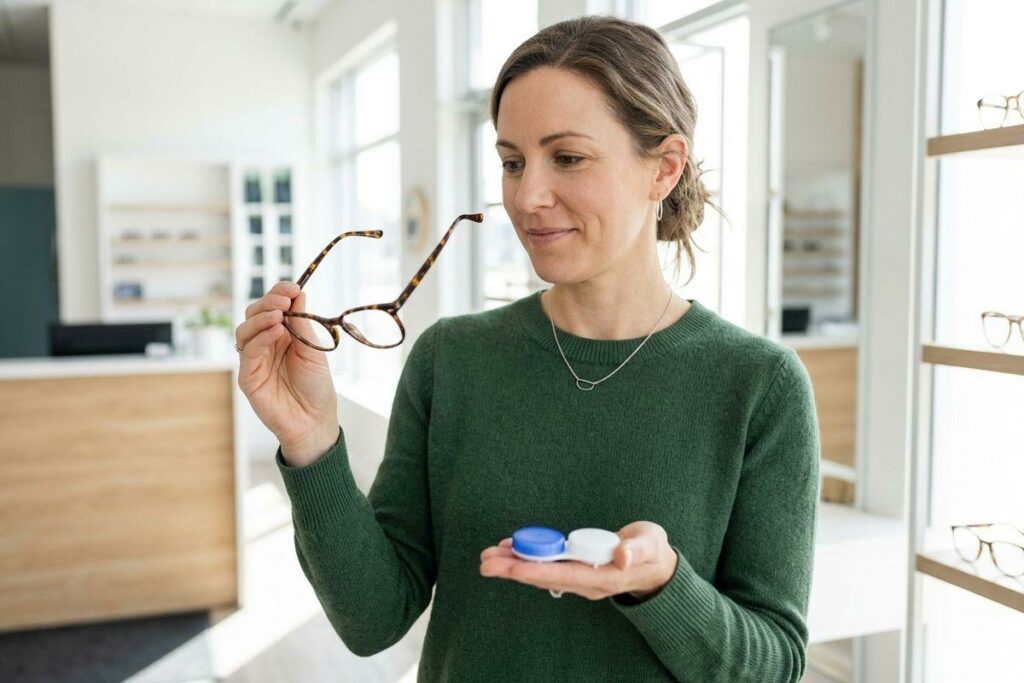
Your glasses prescription looks straightforward. A few numbers per eye, maybe a note about astigmatism, an expiration date at the bottom.
So it’s fair to wonder whether you can drop those numbers into an online checkout and have contact lenses show up at your door a week later. A glasses prescription and a contact lens prescription aren’t the same, and one can’t stand in for the other.
The Importance of the Gap Between Lens and Your Eye
Glasses sit roughly 12 millimeters in front of your eye. Contact lenses rest right on your tear film. That gap affects how much light bends before it reaches your retina.
When you move a lens closer to the eye, the power needed to focus that light moves with it. Mild prescriptions barely register the difference. Stronger ones absolutely do. Someone wearing -7.00 glasses may need a noticeably weaker contact lens to land the same focus.
Why You Cannot Convert Your Own Prescription
Conversion charts float around online, and they’re not useless. Your optometrist reads them next to your corneal measurements and what your eyes actually did during the exam. However, you cannot just subtract or add numbers on your own to find your contact lens power. Your optometrist uses specific mathematical calculations to adjust the power based on the vertex distance. A professional calculation helps you get clear vision without guessing.
Guess at the number yourself, and you may end up with lenses that never quite do the job. Cue the squinting at highway signs and the assumption that you bought a bad box.
What Your Contact Lens Prescription Includes
Pull one up and you’ll find details that have nothing to do with frames:
- Base curve, which matches the curvature of your cornea so the lens sits where it should
- Diameter, or how wide the lens runs from edge to edge
- Power, already adjusted for that vertex distance
- A specific brand, since fit and material vary from one manufacturer to the next
- An expiration date, often 1 year out
Get the base curve wrong and the lens can slide off-center with every blink. Too tight, and it grips the eye and leaves you red by mid-afternoon.
Material matters more than most people expect. Work in a dry office under the vents all day? You may do better in a lens built to hold moisture.
What Happens at a Contact Lens Fitting
A fitting adds a few steps to a standard eye exam.
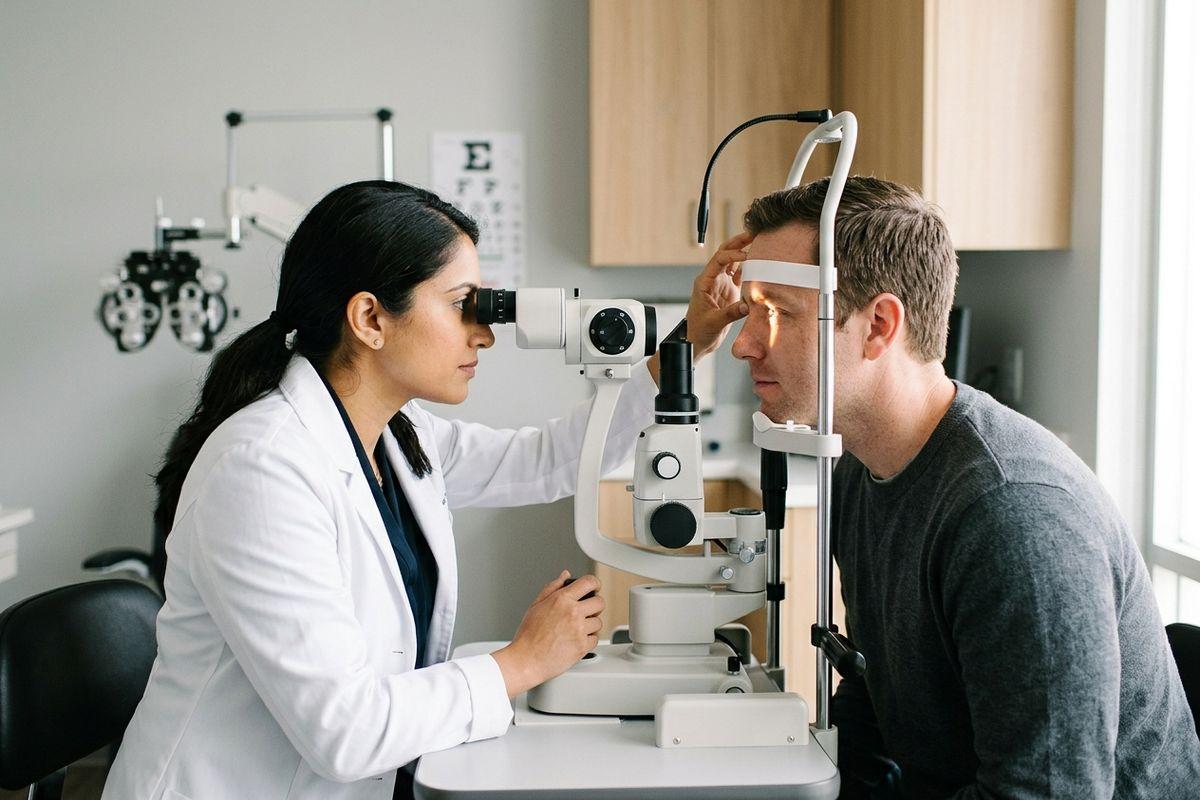
Your optometrist maps the surface of your cornea and checks your tear film to see whether your eyes stay wet enough for lens wear. Dry eyes don’t disqualify you. They steer the material choice.
Then you try lenses on. The optometrist checks the fit under a microscope to confirm the lens centers properly and moves the right amount when you blink.
You’ll practice putting them in and taking them out before you leave. Most people need a few tries, and that’s normal. Plan for the visit to run longer than a routine exam.
After that, you wear trial lenses through a regular day. Screens, driving, whatever your evening looks like. Then you report back on how they felt at hour 2 versus hour 10.
Signs the Prescription Isn’t Right
Ill-fitting lenses tend to announce themselves. Watch for:
- Vision that blurs or drifts in and out through the day
- Headaches after screen time, on top of digital eye strain
- Redness that lingers well after you take the lenses out
- A lens that slides off-center or pops out when you rub your eye
- Burning within the first hour of wear
A lens that fits too tightly limits the oxygen reaching your cornea, which raises the risk of infection and small scratches on the eye’s surface. Call your optometrist when any of that turns up instead of waiting it out.
Get the Numbers Right Before You Order
Keep both prescriptions current and you can move between frames and lenses however your week goes. Contacts for the gym, glasses on the couch at 9 p.m.
Book a contact lens exam before you order your next supply. The team at Vision Veritas Eyecare can map your corneas and send you home with trial lenses to test in real life.
Schedule your appointment with an optometrist and find a fit your eyes can live with.