
Kids today spend a lot of time on screens, and it’s not unusual for their eyes to work overtime keeping up with tablets, phones, and computer monitors. Sometimes that near-focused lifestyle plays a role in nearsightedness, or myopia, showing up earlier than parents expect.
Myopia glasses are specialized lenses that correct blurry distance vision while also working to slow the elongation of a child’s eye. That second part, the slowing-down part, is what sets them apart from a regular pair of glasses.
What’s Actually Happening Inside a Nearsighted Eye
When light enters a healthy eye, it lands directly on the retina, the light-sensitive tissue lining the back of the eye. In a nearsighted eye, the eyeball is a bit longer than it should be, front to back. That extra length means light focuses just in front of the retina instead of on it, so distant objects, like a school board or a stop sign, look blurry.
This kind of elongation usually shows up during childhood, right when kids are growing fast. Watch for a few common signs at home:
- Squinting to see the TV or the classroom board
- Sitting unusually close to screens
- Holding books or tablets close to the face
- Complaining of headaches after reading or screen time
Why Acting Early Makes a Difference
Managing myopia early helps protect your child’s eyes down the road. When a prescription climbs quickly, lenses can get thick and heavy on a young face.
Addressing the root cause early can help keep the prescription lower, so your child ends up with thinner, lighter lenses. It may also lower the risk of serious eye conditions later in life, such as:
- Retinal detachment
- Glaucoma
- Cataracts
- Macular degeneration
How Myopia Control Lenses Actually Work
These lenses do more than sharpen distance vision. Hundreds of tiny, nearly invisible rings, called lenslets, sit around the outer edge of the lens, while the center stays clear. That clear center gives your child sharp vision for schoolwork and sports.
Here’s the part that matters for eye growth. Standard lenses focus light so the peripheral image lands behind the retina, which can encourage the eye to keep growing longer. Myopia control lenses bend that peripheral light so it lands in front of the retina instead, sending a natural signal to slow the growth.
Myopia Control Lenses vs. Standard Single Vision Lenses
Standard single vision lenses correct today’s blur, nothing more. They help your child see clearly right now, but they don’t address the elongation causing the blur in the first place.
Myopia control lenses work differently. Ask your optometrist about them if you want to manage the underlying growth, not just update the prescription year after year, and help stabilize your child’s vision over time.
What Daily Wear Looks Like
Have your child wear these glasses from the moment they wake up until bedtime. Consistent wear gives the eye the steady signal it needs to manage growth, and most kids adjust to the new lenses within a few days.
During that first week, some kids notice a bit of visual distortion or mild eye strain as their eyes get used to the lens design. Encourage your child to stick with it. Reach out to your optometrist right away if anything feels off beyond that first stretch.
Plan on a follow-up visit every 6 to 12 months so your optometrist can measure eye length and check how the prescription is holding up. These visits matter more than they might seem.
Eye growth moves fastest during childhood, with the biggest changes happening before age 16. Growth naturally levels off as teens move through their later teenage years, so starting during the early school years gives you more time to manage it before then.
Give Your Child’s Eyes a Head Start
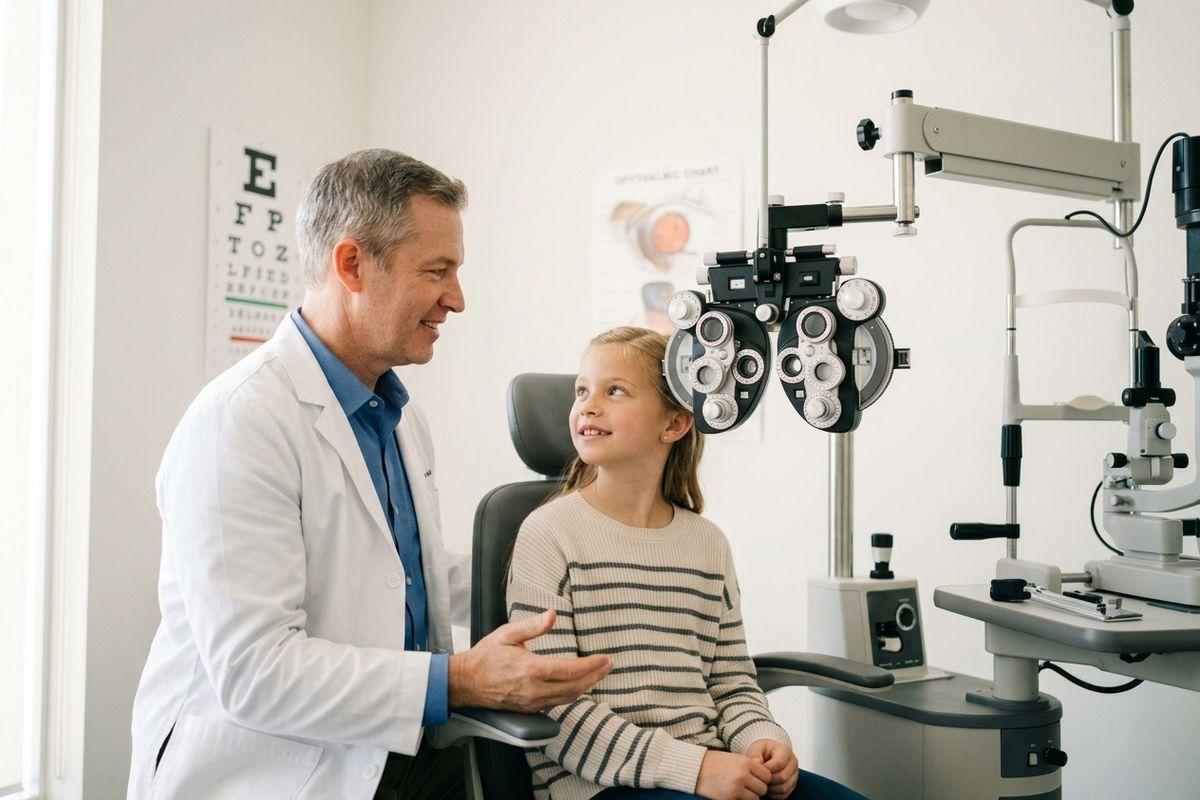
If your child struggles to see distant objects, book a comprehensive eye exam. An optometrist can measure the physical length of your child’s eye with precise diagnostic tools and track how it changes over time.
Reach out to the team at Vision Veritas Eyecare and talk through your options. We’ll walk you through what’s available and help you build a plan that fits your family.