Glasses do a solid job correcting your child’s vision, but they’re not always practical for every situation. Steamed-up lenses during soccer practice or a missing pair right before school can make you start wondering if contacts might work better.
Most optometrists agree kids can start wearing contact lenses somewhere between age 8 and 12, though maturity matters a lot more than the number.
Every child grows at their own pace, so there’s no universal cutoff. The real question is whether your child can handle the daily responsibility, not how old they are.
Options for Kids Under Age 10
If your child is under 10, they can still be great candidates for contacts. Maturity always comes before age when making this decision. Some kids are ready at 8. Others need a few more years, and that’s perfectly normal.
During a visit, your optometrist will talk with both you and your child to get a feel for how ready they really are, not just check a box based on age. They’ll usually ask your child a few simple questions directly, like how they feel about touching their own eye or whether they’d rather try contacts just for sports at first. That conversation tells the optometrist a lot more than a birth date ever could.
It also helps to think about your child’s daily schedule. A busy week full of practices, playdates, and homework can make consistent lens care trickier, so factor that into the timing too.
Signs Your Child Is Ready for Contact Lenses
Before making the switch, it helps to watch how your child handles their daily routines. You can look for specific clues in their behavior to see if they are prepared for the responsibility.
A few signs can point to readiness:
- Washes hands with soap before touching their face
- Follows instructions without needing constant reminders
- Keeps track of their belongings, glasses included
- Keeps up with chores and homework without much prompting
- Shows real interest in wearing contacts and wants to learn how
Benefits of Contacts for Active Kids
Glasses can feel restrictive once your child starts running, jumping, or diving for a ball. Contacts can offer a few practical perks for active kids:
- Full peripheral vision, so nothing blocks their view during play
- No worries about fogged-up or broken frames mid-game
- Daily lenses may help slow the progression of nearsightedness as your child grows
Daily disposables tend to be the go-to choice for kids just starting out. There’s no cleaning or storing involved. Your child wears a fresh pair each morning and tosses them at night, which cuts down on a lot of the routine that trips up younger wearers.

Safety Rules Every Contact-Wearing Kid Should Know
Good habits protect your child’s eyes and keep their lenses comfortable day to day.
Take Contacts Out Before Bedtime
Have your child remove their contacts before sleep, even for a quick 20-minute nap. Sleeping in lenses cuts off oxygen to the eye and raises the risk of an eye infection.
Set a simple nightly routine, like removing lenses right after dinner or before brushing teeth. A predictable habit sticks a lot better than a rule your child only remembers half the time.
Safety Guidelines for Colored Lenses
Colored and decorative lenses look fun for Halloween or dress-up, but they’re not toys. They still need a prescription and a proper fitting from an optometrist, so steer clear of anything sold online or at a novelty shop. Unregulated lenses can lead to serious eye infections.
How an Optometrist Can Help You Get Started
When you are ready to explore contacts for your child, Professional guidance makes the switch to contacts a lot smoother for everyone involved. Here’s what that support typically looks like:
- Schedule a complete eye exam to check your child’s overall vision and eye health.
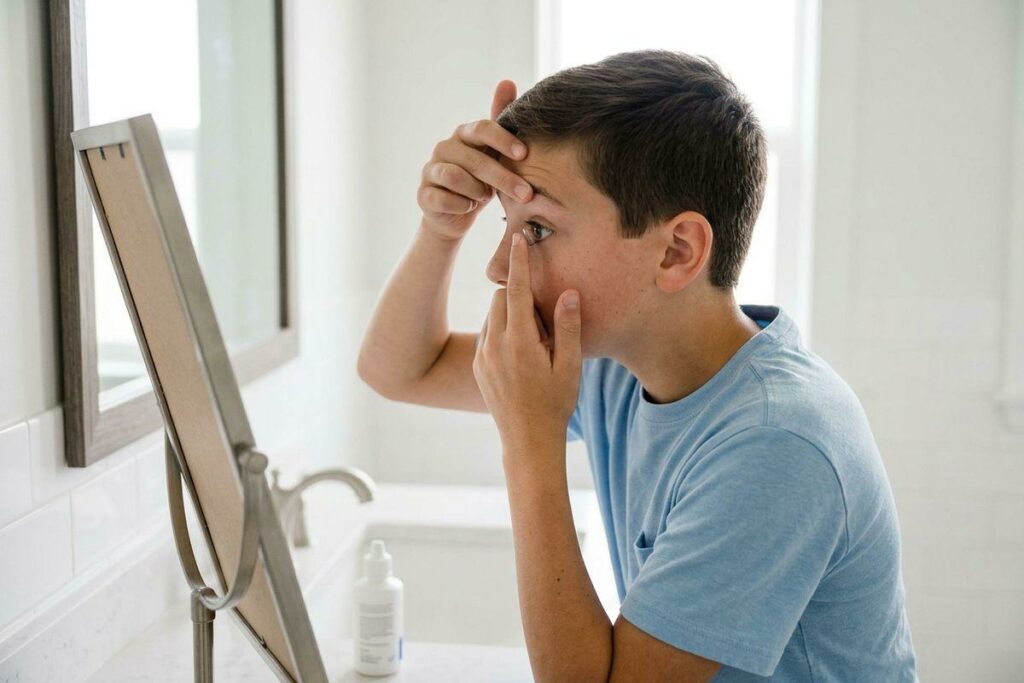
- Learn safe insertion and removal techniques together until your child feels confident.
- Get matched with a daily disposable option that fits your child’s routine.
Ready to Make the Switch?
Every kid moves at their own pace, and that’s okay. If your child’s been asking about contacts or you’ve noticed a few of these readiness signs at home, it’s worth bringing up at their next visit.
A quick conversation with an optometrist can tell you a lot more than guesswork ever will. The friendly team at Vision Veritas Eyecare is happy to walk you through what to expect and help you schedule an appointment whenever you’re ready to take that next step together.